5v5 Map - Longshoreman
Tactical PVP FPS
Created as the Level Designer for Back Pain Games
Developed over 3+ Months
Unreal Engine 5
Small Team
Longshoreman is the first map for Pattern Zero, a PVP Tactical FPS inspired by games like Rainbow Six Siege and Counter Strike.
As the Level Designer for the team, I ingested the different experience points that my teammates wanted to play, and built a map that attempted to achieve our goal player fantasy.
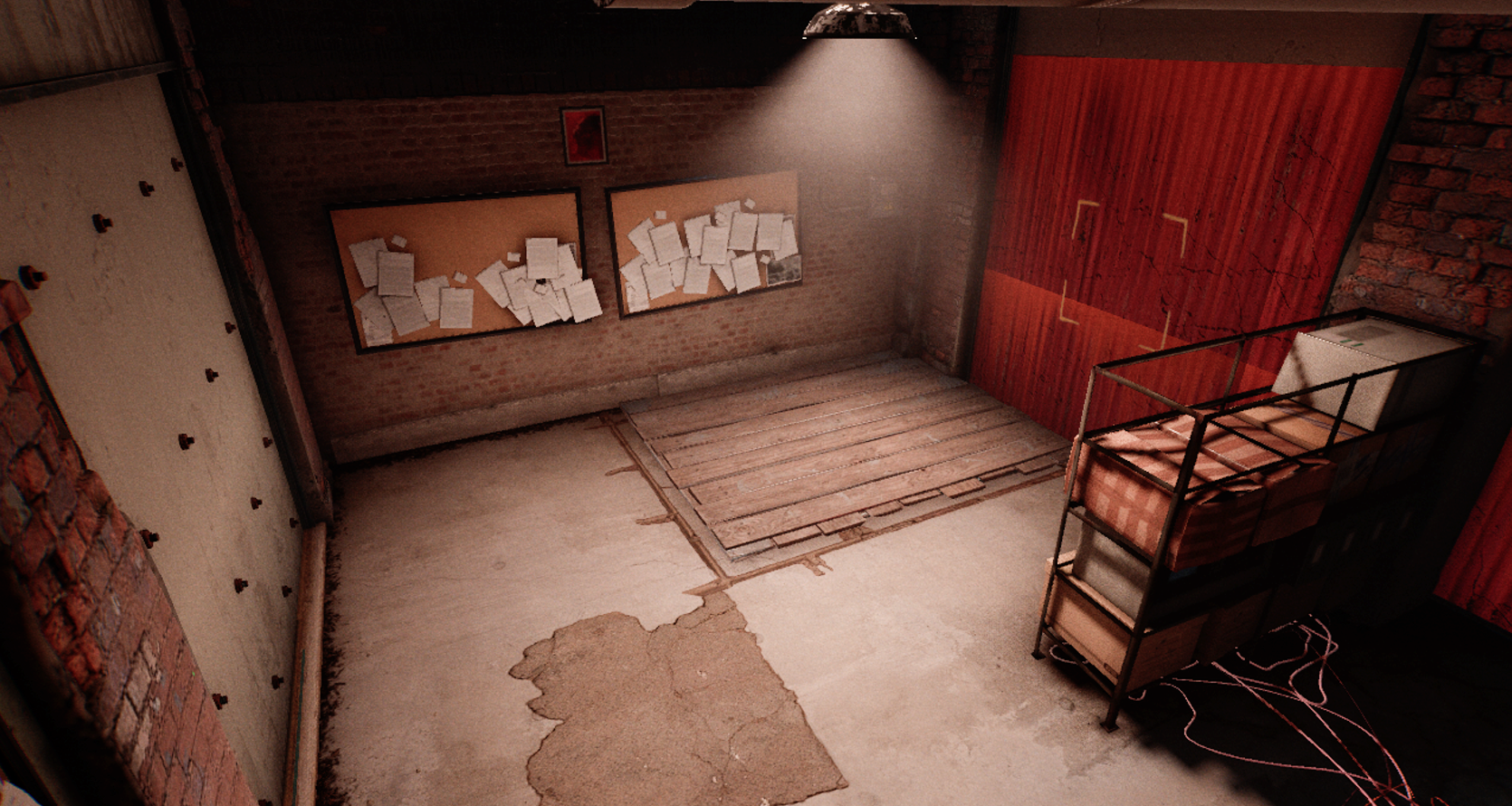
(1) Layered Destruction points provide points to reconsider persistent equip use
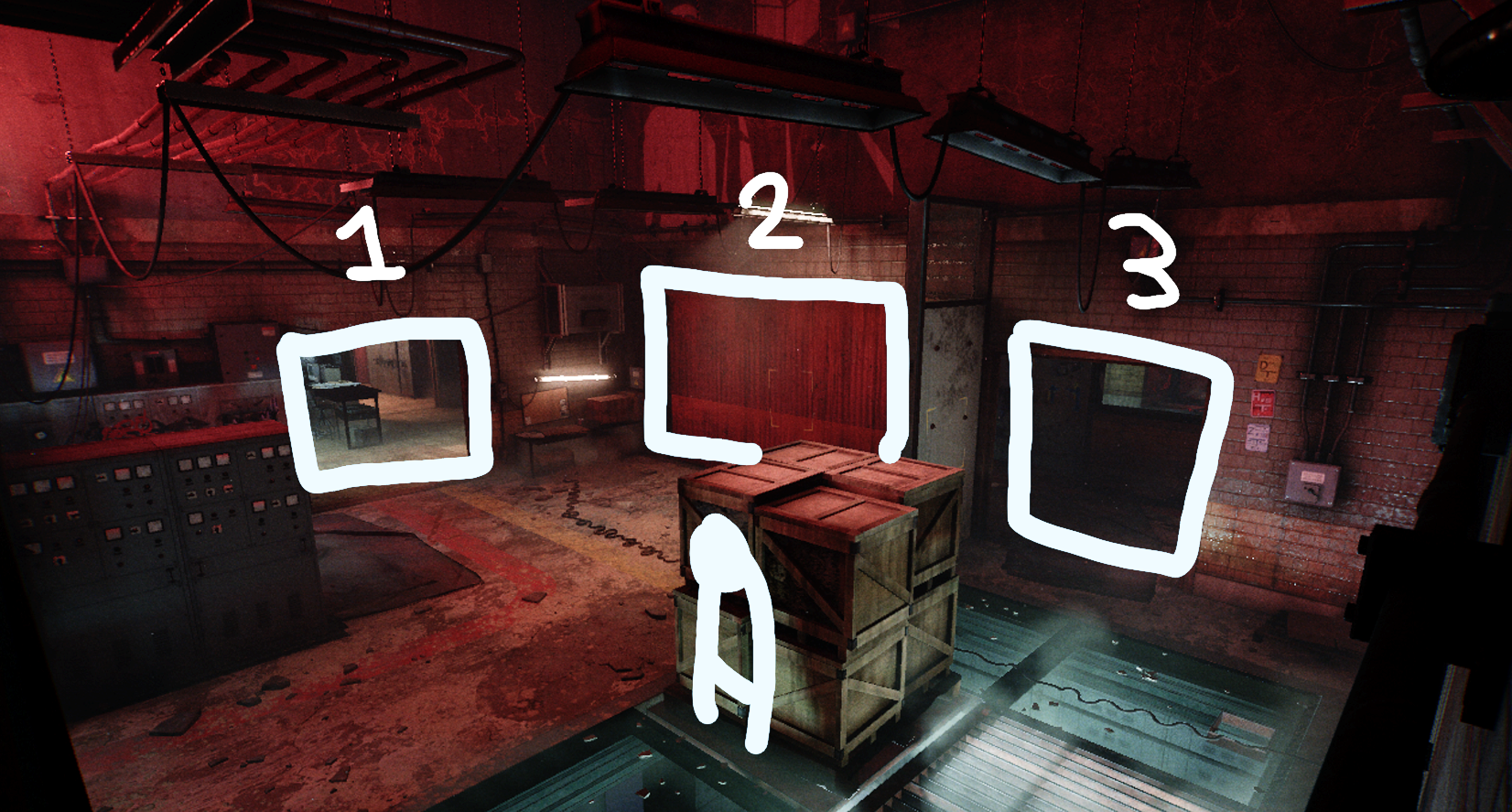
(2) Defenders are encouraged to use equipment to negate overwhelming sites
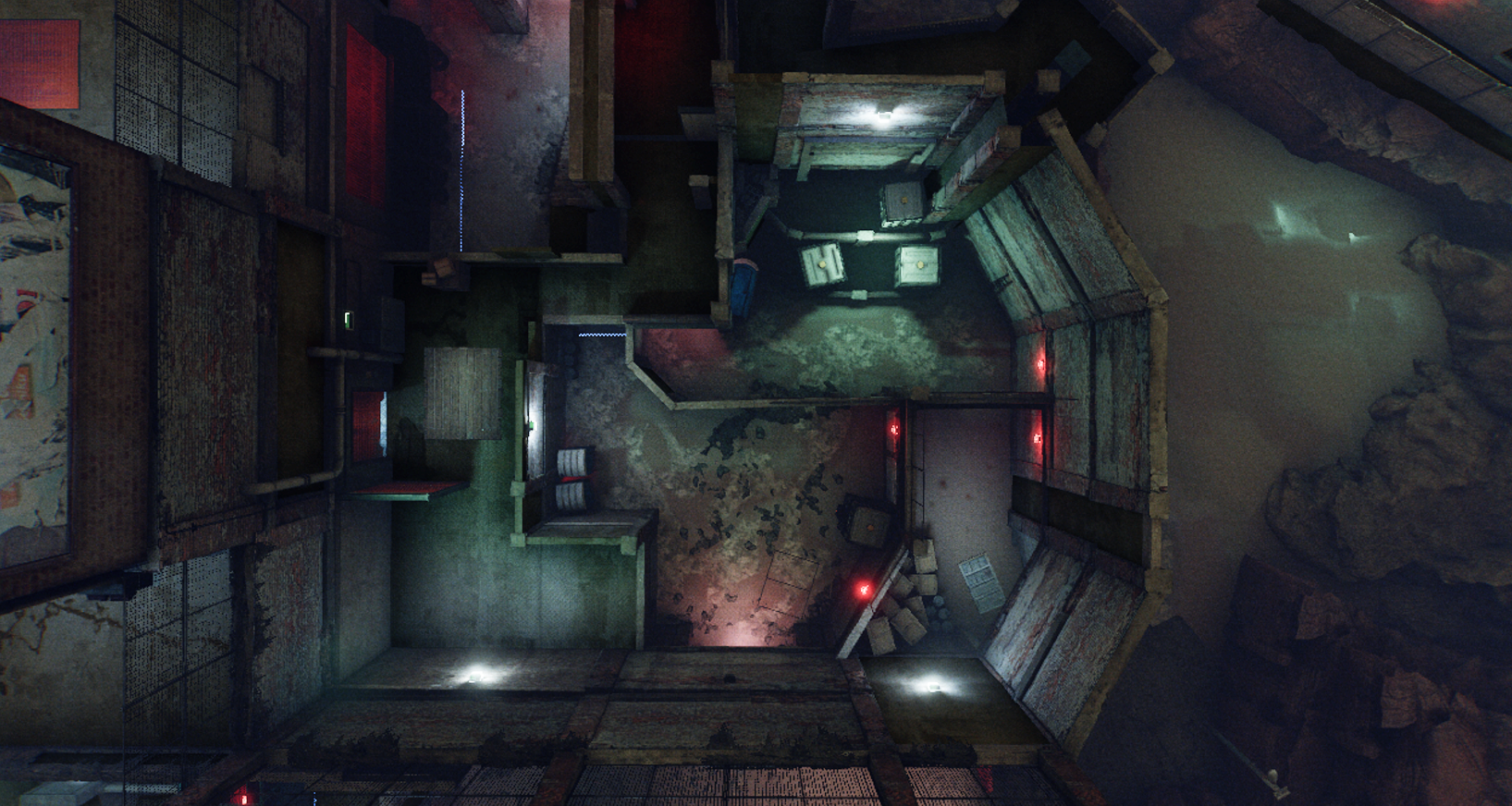
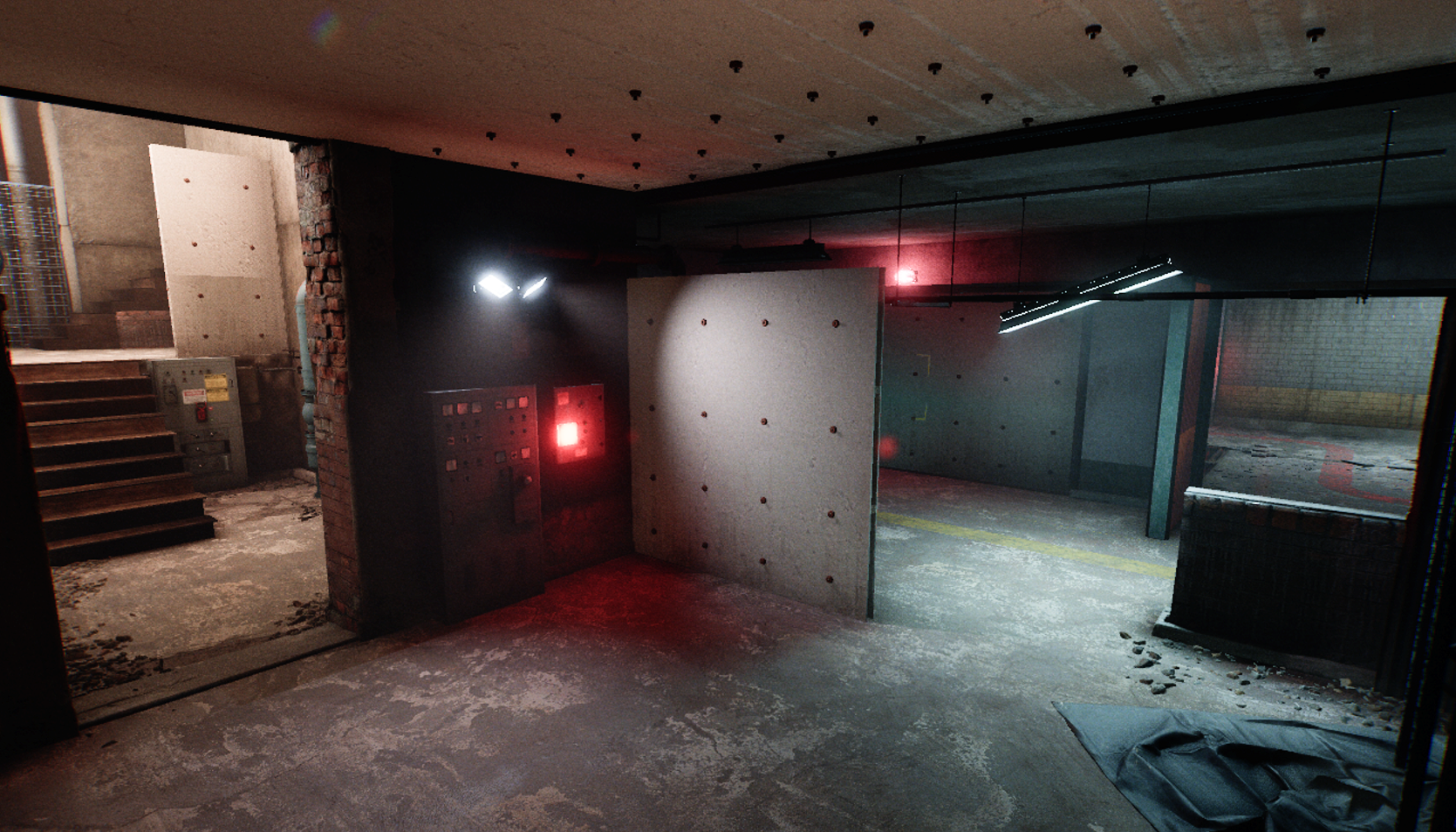
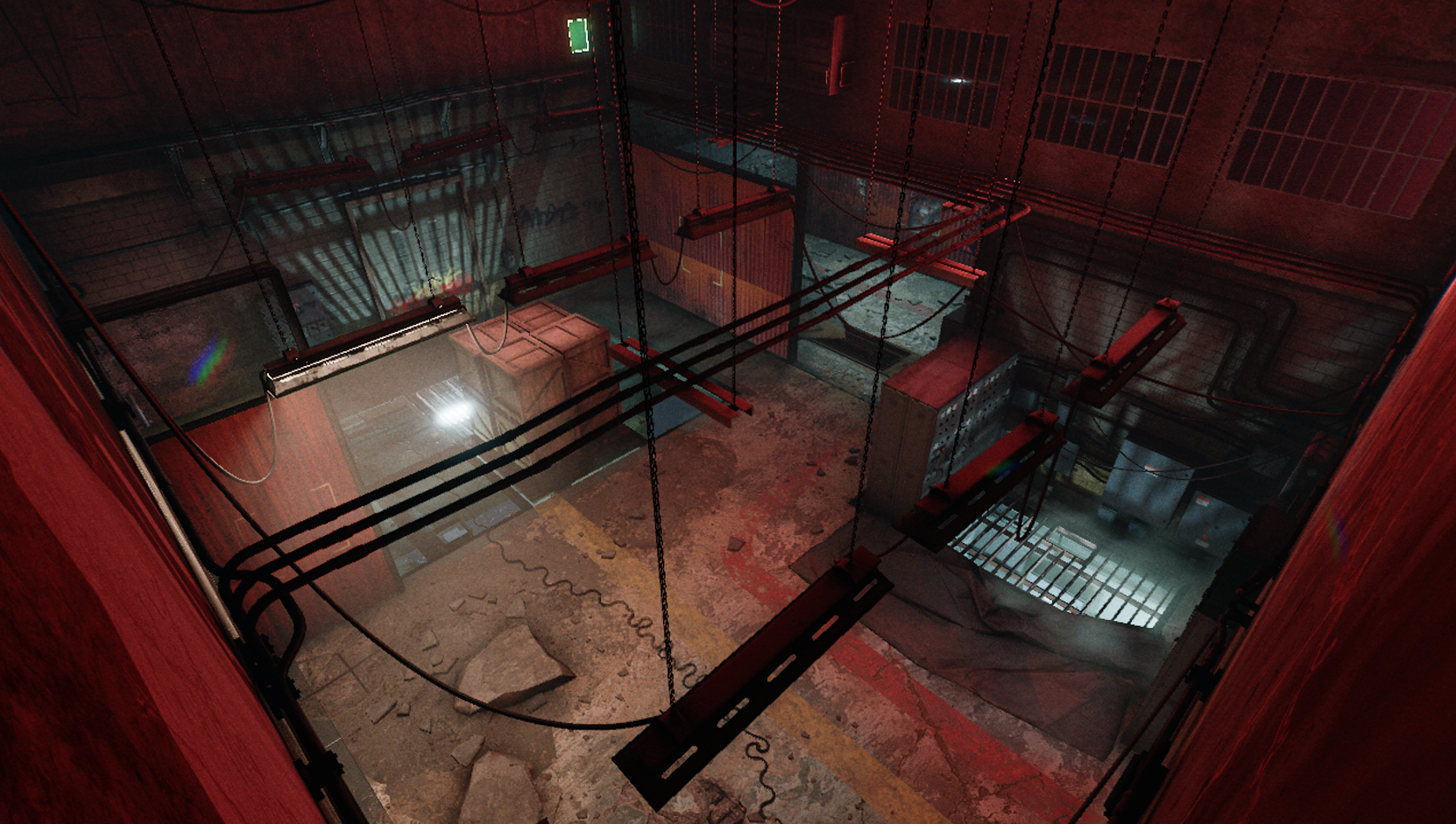
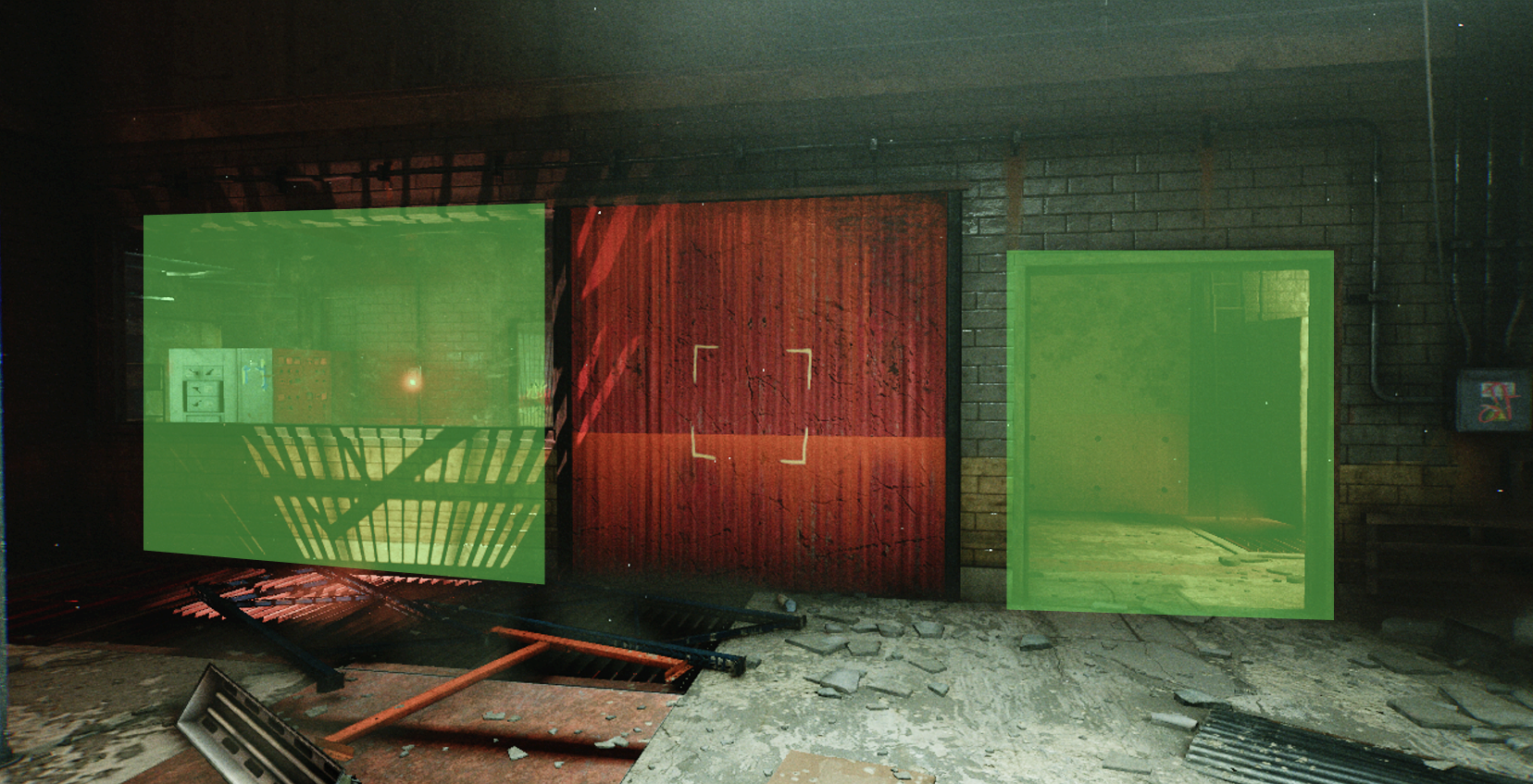
(3) Attackers can create more dynamic lines of sight by breaking hard walls
The Solution
The solve for this ended up being fairly simple, but had interesting cascading effects:
Giving certain walls a “hard” descriptor that made them unable to be broken and communicating that to players
Giving defending players the ability to harden walls themselves by placing a barricade on that wall
Giving Attacking players the ability to break a select amount of hardened walls per round
Gameplay
Map Structure
Pattern Zero is built to be played in a “Search and Destroy” gamemode:
2 Teams (Attackers and Defenders)
5 Players on each Team
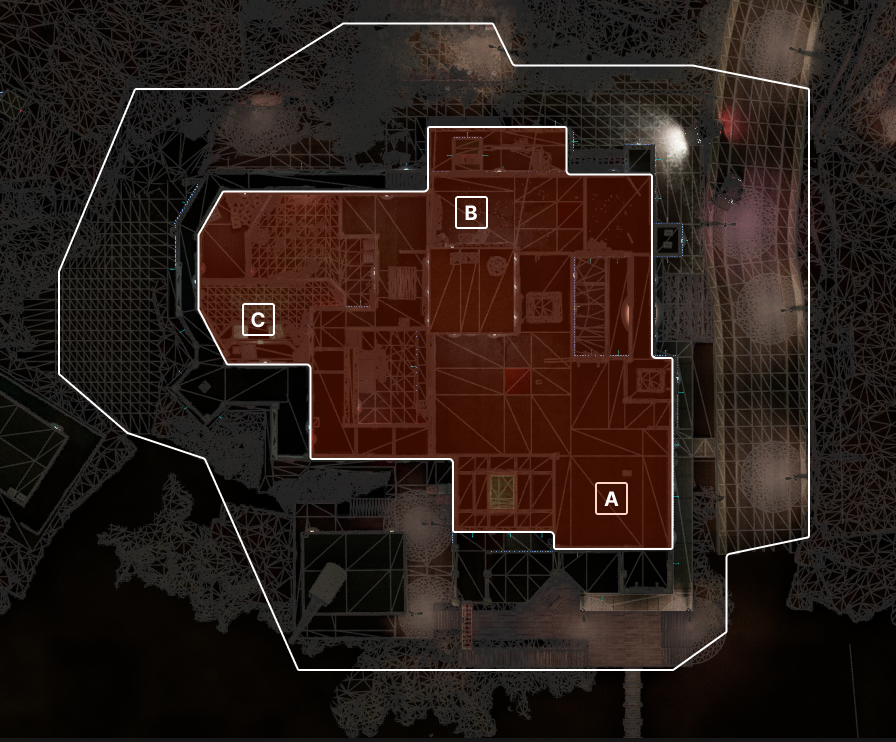
2 Core Plant Sites
Can be planted at any time
Are easier to defend
1 Alternative Plant Site
Can be unlocked later in a match
Harder to defend
An “Internal” Area Defenders must stay in
An “External” Area Attackers can spawn into
Attackers coordinate amongst themselves to drop into the map at tactically wise locations. Defenders prepare for the oncoming attack by positioning themselves and choosing advantageous angles to hold. As attackers push against defenders, they rotate through locations on the map.
I worked to create a map that could work as a template for this gameplay. Then I put time into finding an interesting context for the map. I created a starting layout for the map themed around a dock (hence the name longshoreman). We ended up moving into a more abandoned factory theming for art reasons, but the name stuck.
I focused on creating fun layouts, but soon ran into a problem.
The Problem
Pattern Zero’s major diversifier is its tech for destruction. Players can create holes that correspond with the weapon, ability, or melee attack they use to make the hole. This creates an interesting design challenge where the level designer can’t enforce a very tight angle without restricting players’ ability to interact with a core game system.
> Pattern Zero
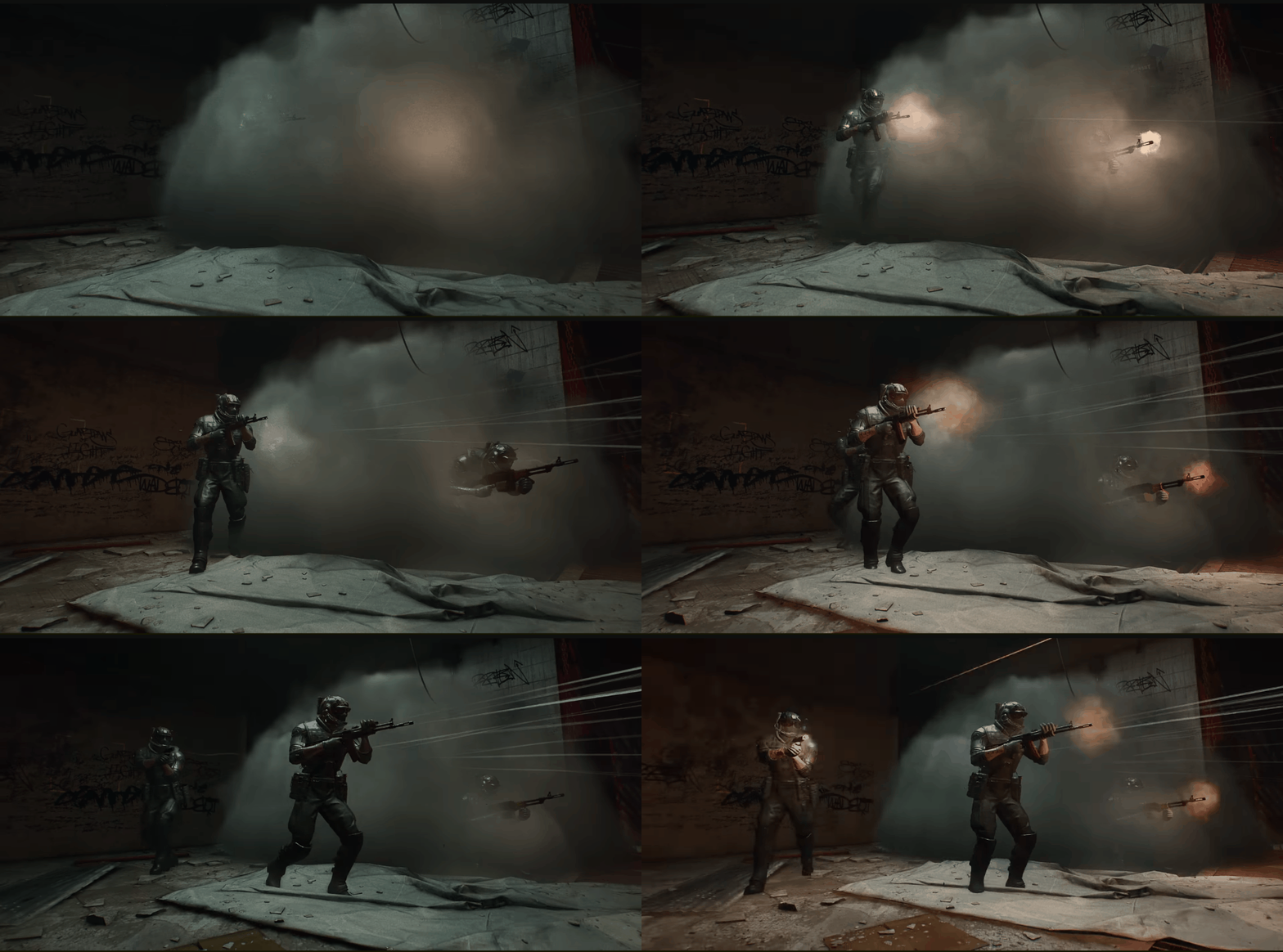
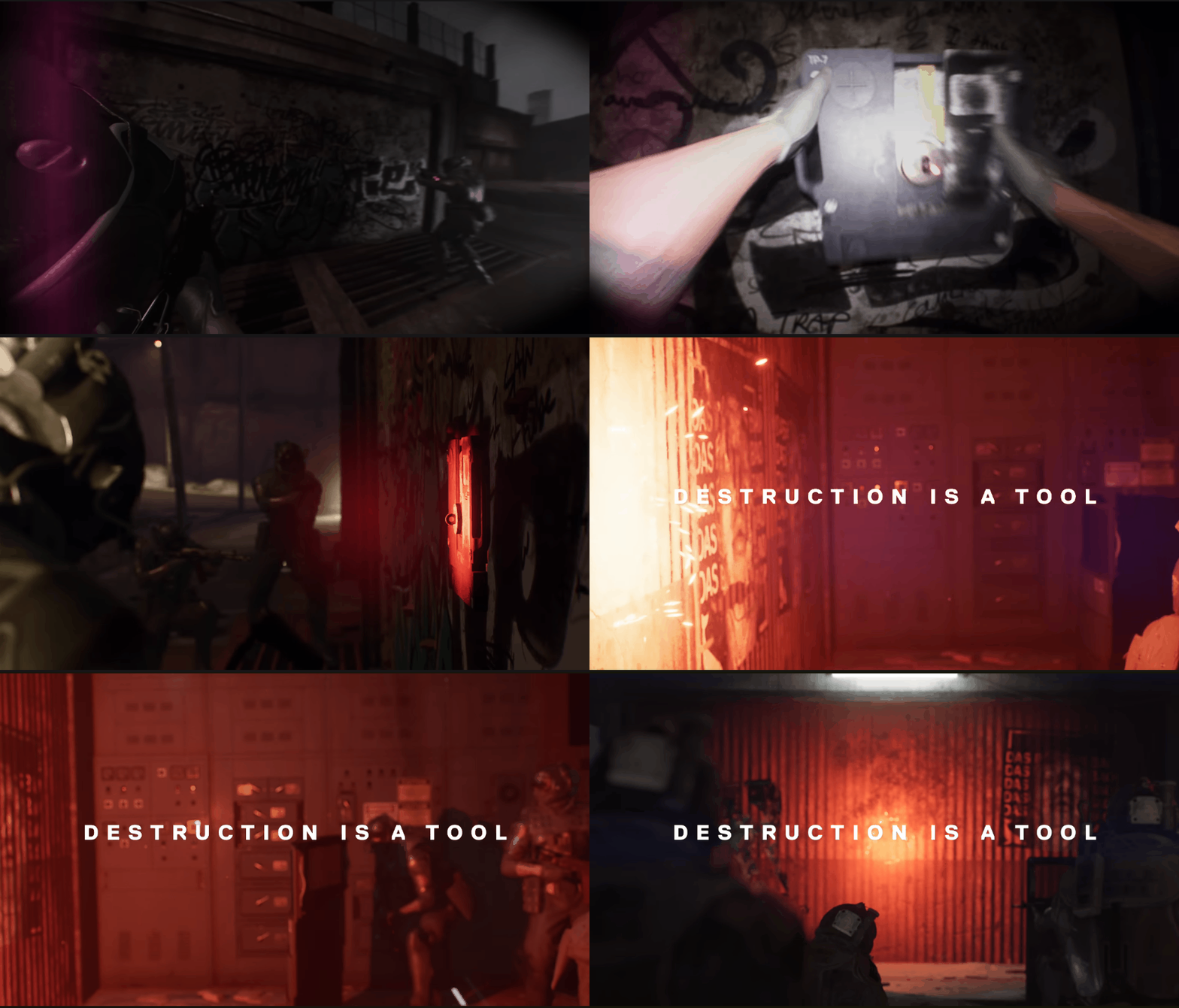
Letting players dictate their own angles allowed for me as a level designer to entertain many possibilities with each site. It provides an opportunity for player expression and shifts the focus in the level design process from restricting players to empowering players. Instead of keeping how players cross through doorways and clear rooms in mind, I was able to think of FPS maps in a different way- creating interesting break up of spaces and cover that evolved with the space.
Selected Captures from the Map
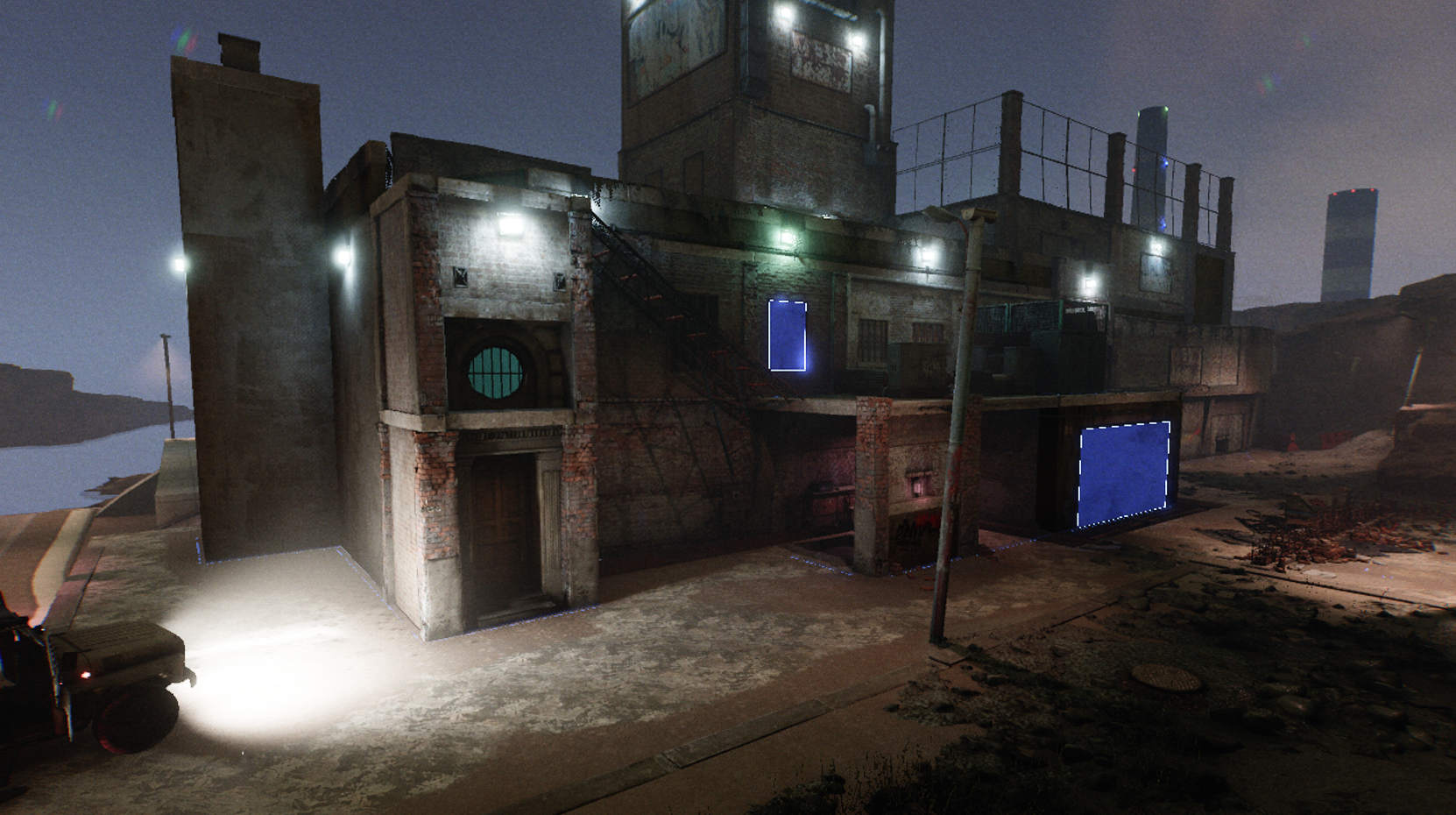
North side Map Attacker approach
Top down view of Western Approach / Alternative Plant Site
First Floor Rotate to A Site on Second Floor
First Floor B Plant Site Adjacent Room
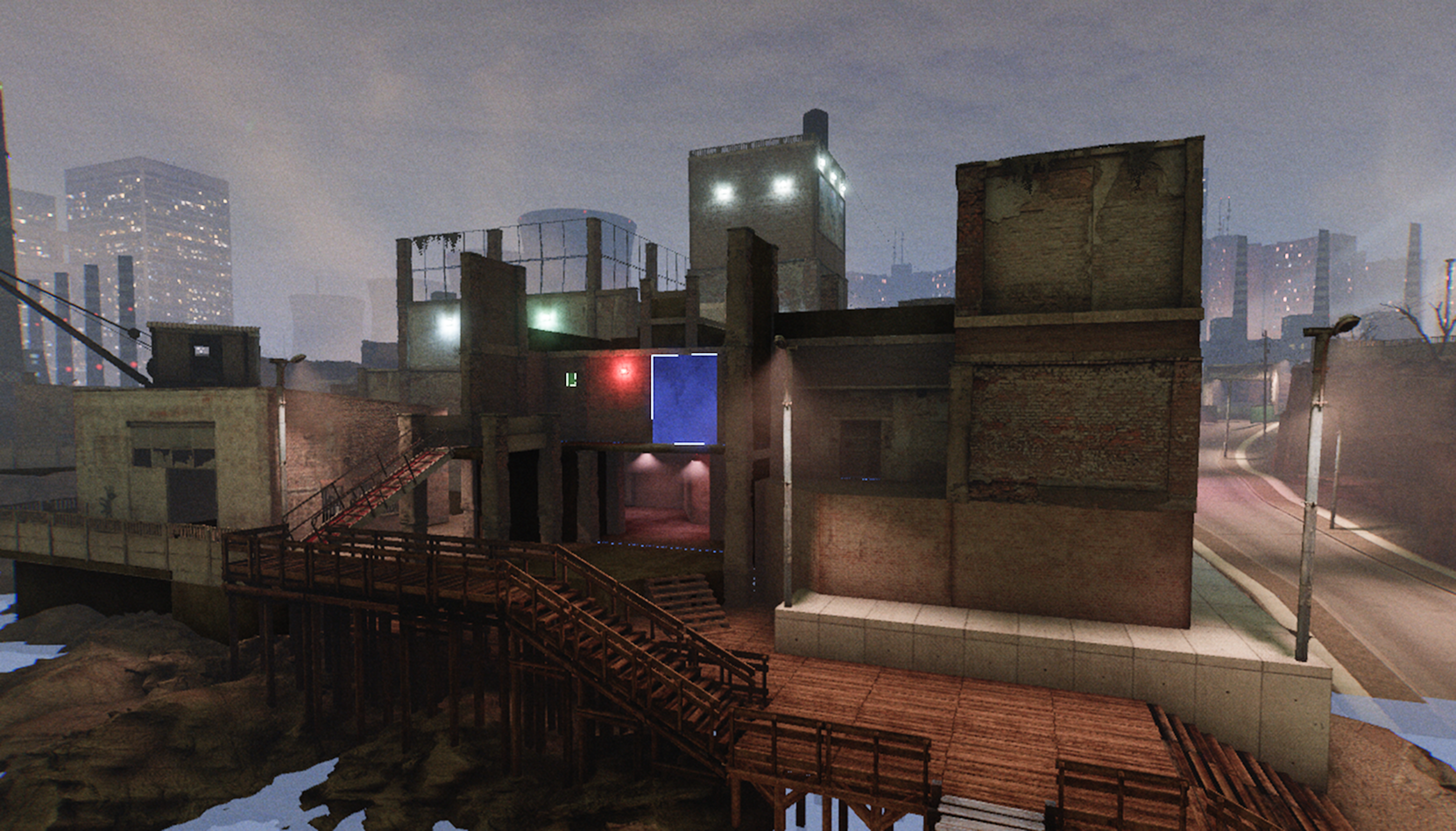
South side Map Attacker approach
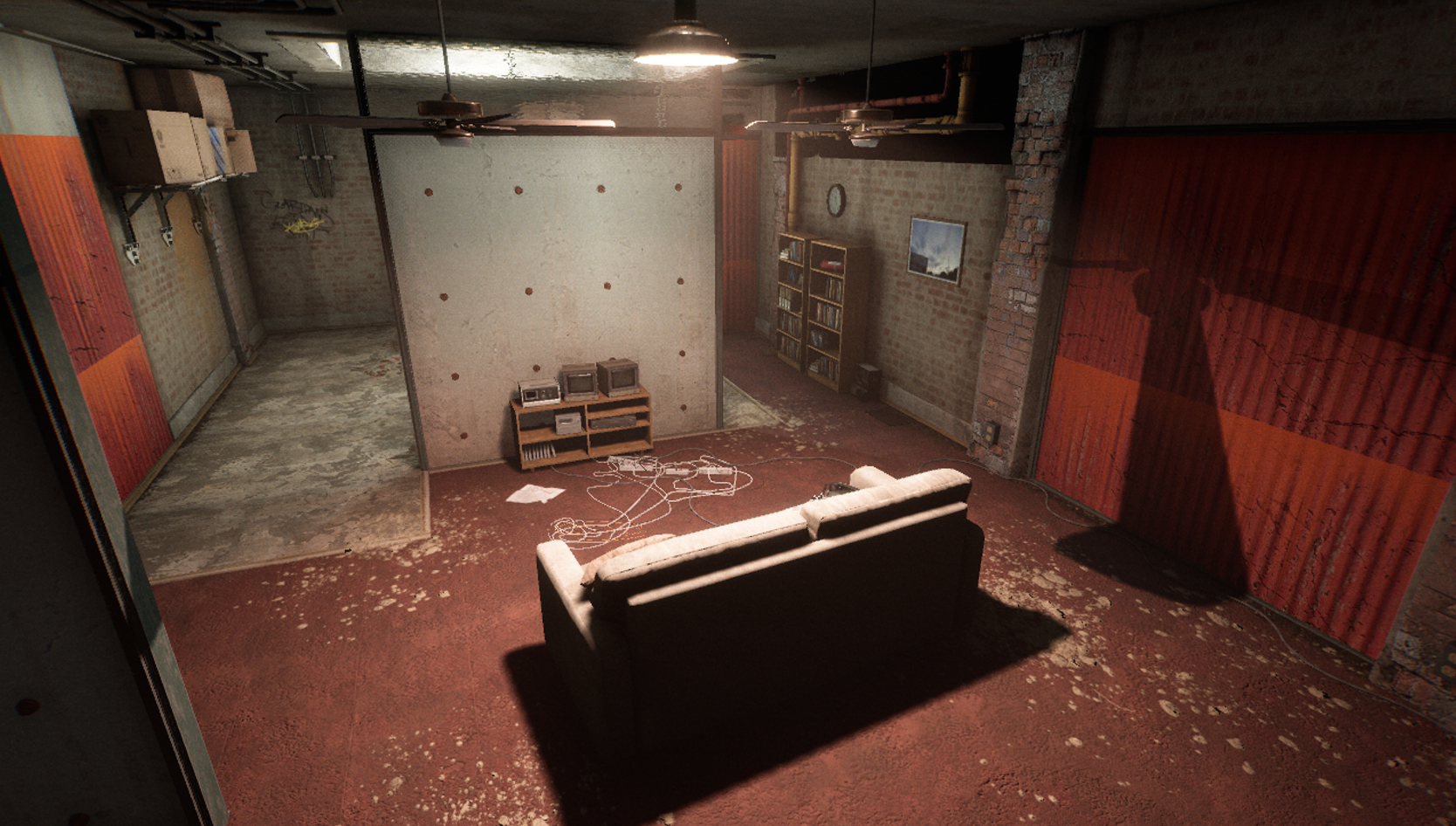
Back of A Plant Site
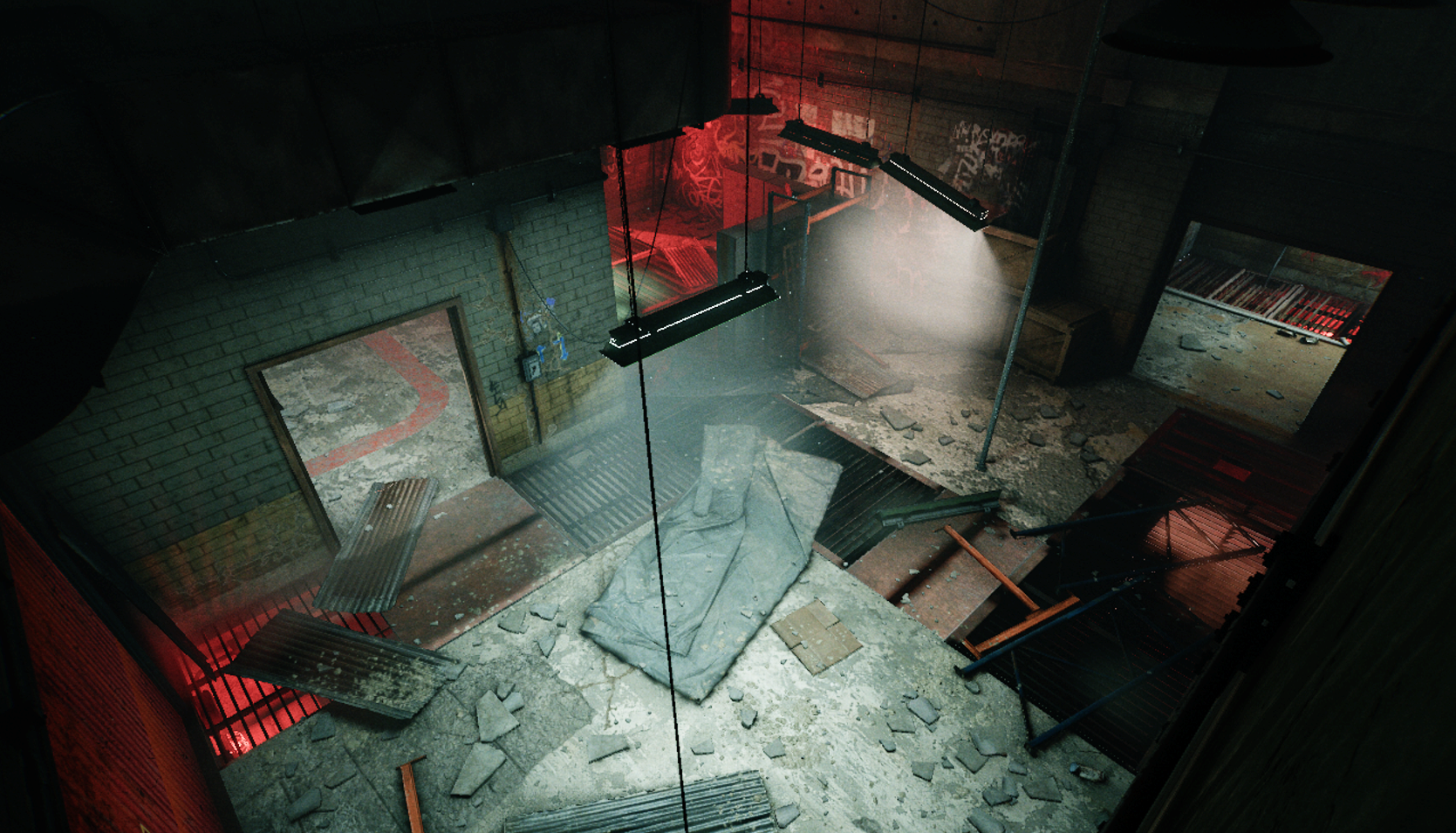
First Floor B Plant Site
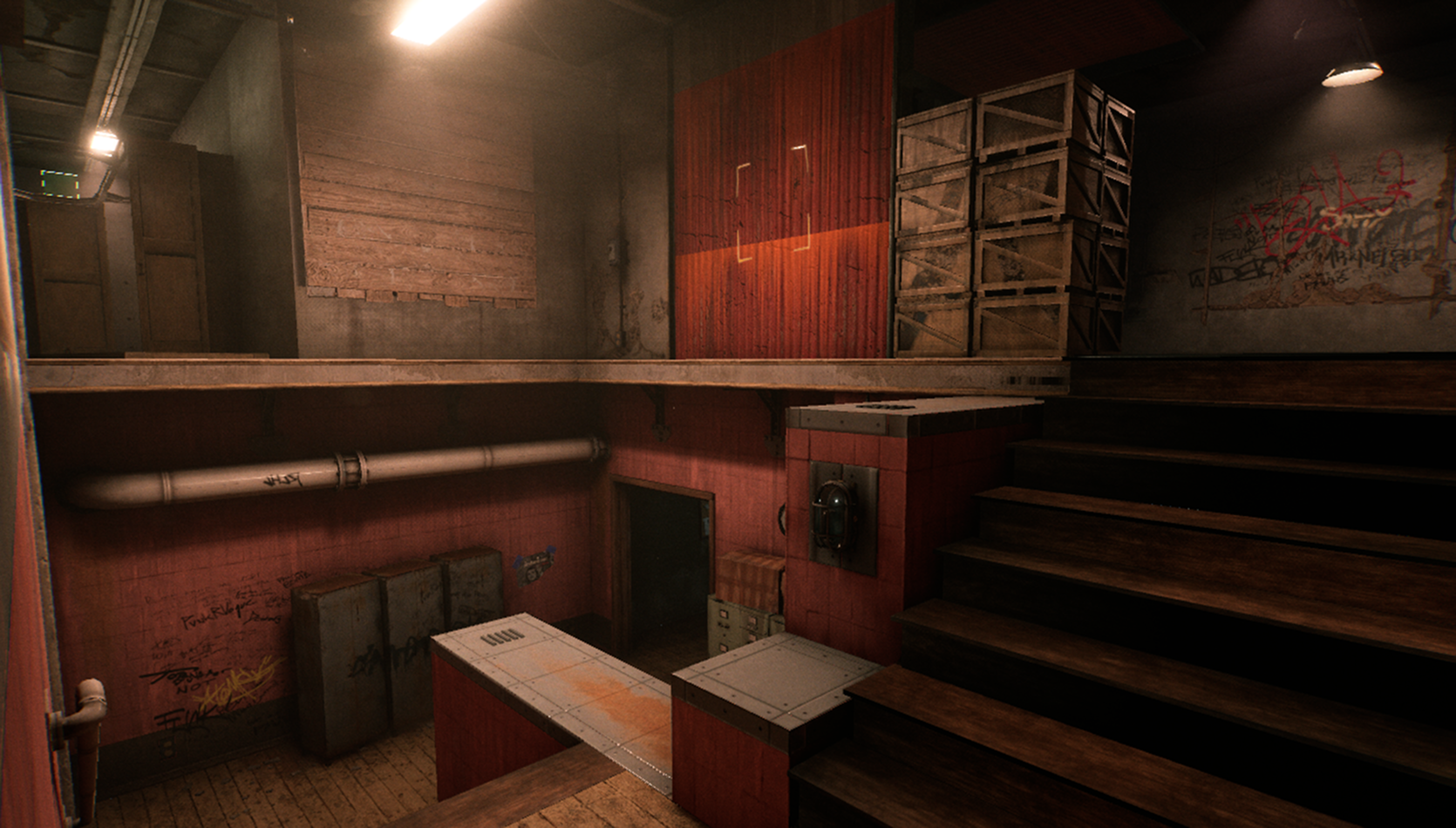
First to Second Floor B Plant Site Rotate
Additional Thoughts
Pattern Zero has a handful of core gameplay concepts that must be known when looking at a map for its gameplay.
The game is fast paced. Characters can cover a lot of ground when needed.
The act of maneuvering around the map creates audio information players can use to anticipate and react to enemy movement. So players must also be able to move slowly.
That info, combined with a Low TTK creates situations where the player who has the full grasp of a gameplay scenario gains the upper hand over the player who acts first.
Player character abilities and equipment exist to bridge the gap in those scenarios. You can play around with the information that you’re creating on a map, to create a different dynamic between the Info and the person gathering it. From there, it’s up to each players discretion to communicate whether that info is valid or not, and how their team should follow up on it based on their own loadouts, roles, and skills+weaknesses.